This article was originally published in SPECTRUM, a science magazine published by ChemSA — Central Department of Chemistry, Tribhuvan University in 2005. It was shared electronically on NepaChem to reach a wider audience.
Potentiometry is a quantitative analytical technique that measures the electrical potential of an electrochemical cell under conditions of zero current flow. It is widely used in analytical chemistry for determining the concentration of ions in solution.
Direct Potentiometry
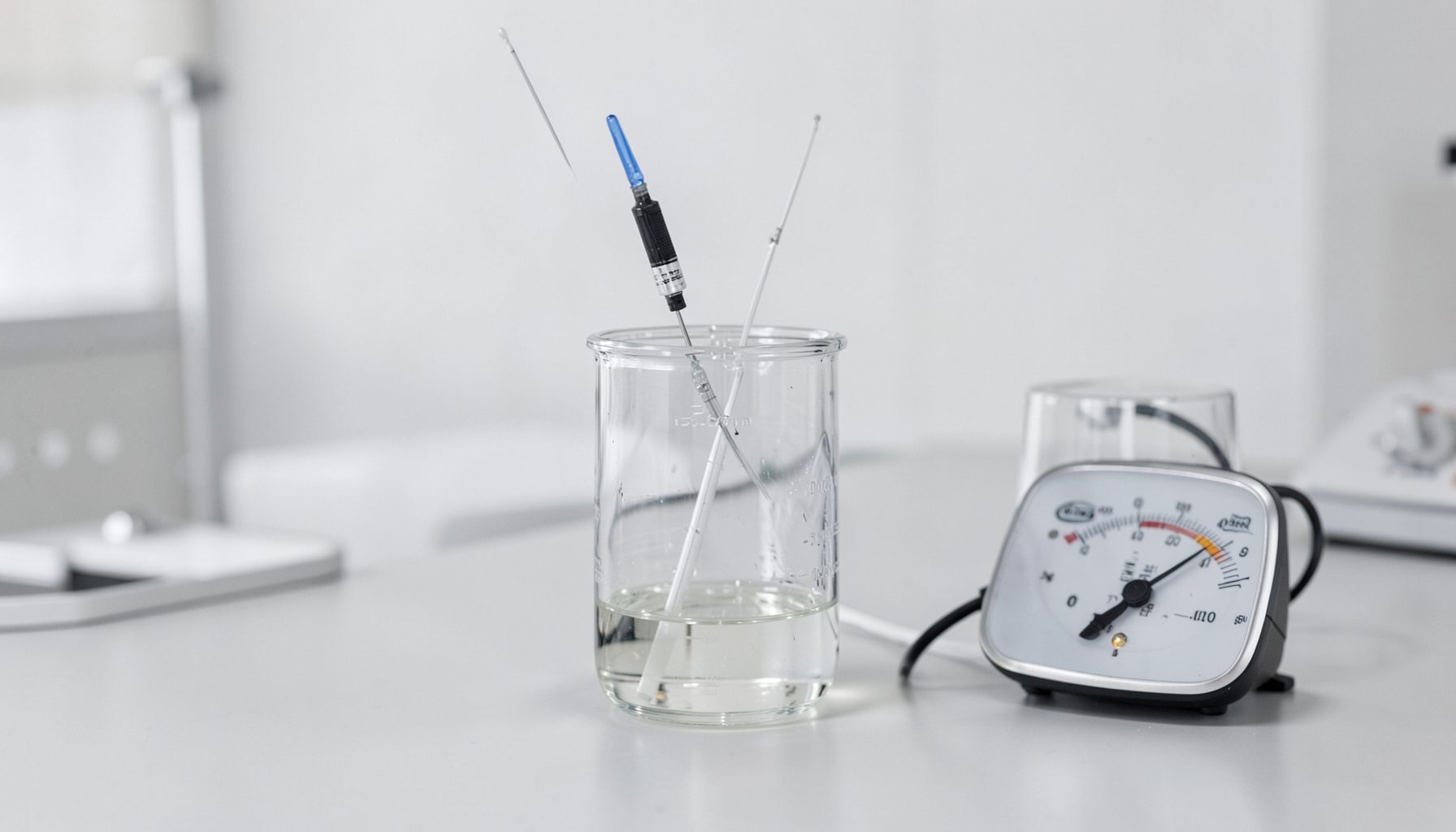
In direct potentiometry, the potential of an indicator electrode is measured against a reference electrode. The measured potential is directly related to the concentration (more precisely, the activity) of a specific ion in solution via the Nernst equation. Ion-selective electrodes (ISEs), including the familiar pH glass electrode, are the most common tools for direct potentiometric measurements.
Potentiometric Titration
Potentiometric titration involves monitoring the change in electrode potential as a titrant is added to the analyte solution. The equivalence point is identified by a sharp change in potential. This method is especially valuable for titrations where a visual indicator is unsuitable — for example, in colored or turbid solutions, or when analyzing very dilute samples.
Applications
Potentiometric methods find use across environmental monitoring, pharmaceutical analysis, food chemistry, and clinical laboratories. Common applications include pH measurement, determination of fluoride in drinking water, and analysis of chloride, nitrate, and potassium ions in various sample matrices.
The technique's simplicity, low cost, and adaptability to field use make it a staple in both teaching laboratories and industrial quality-control settings.