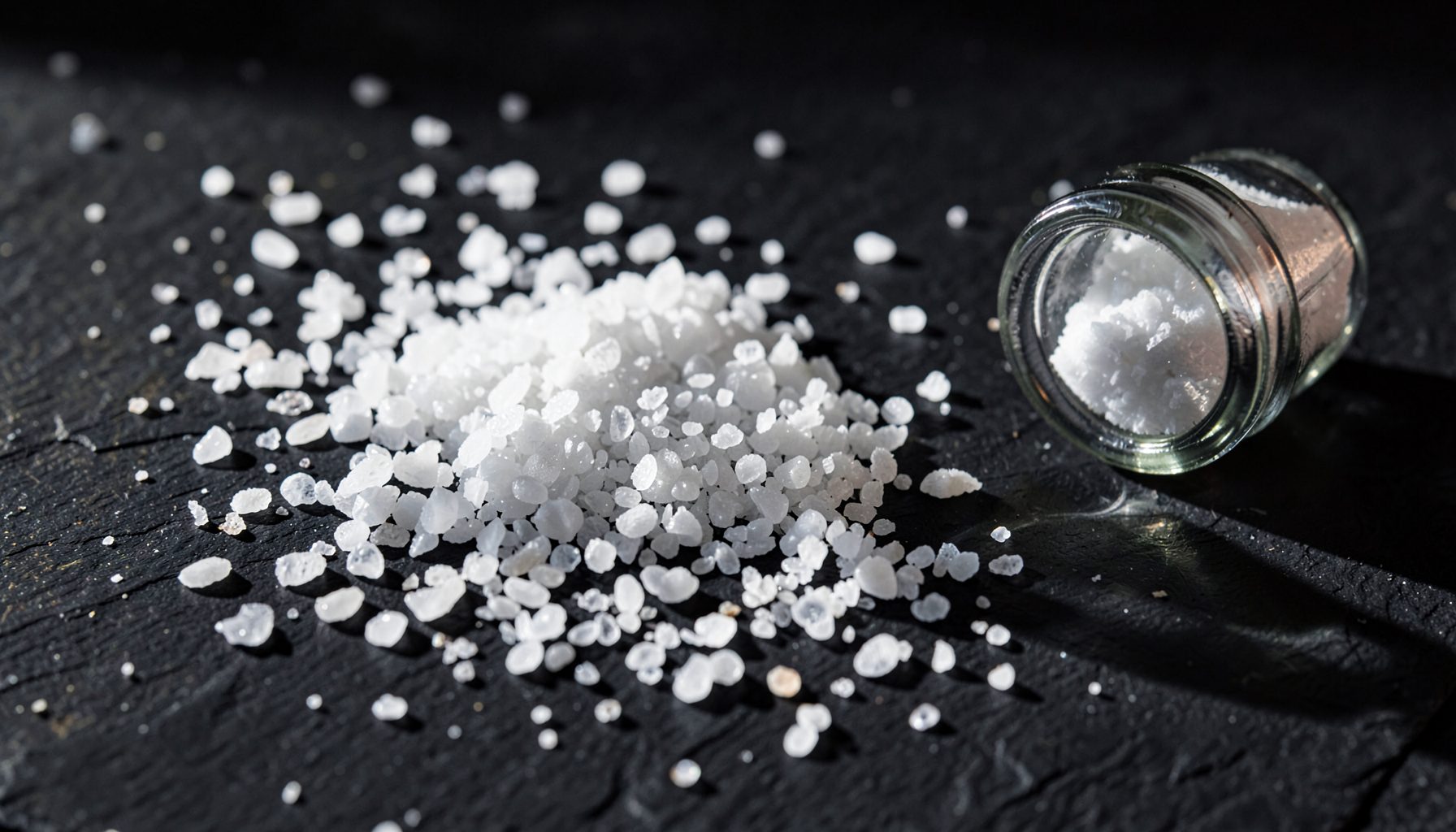
There is no doubt that common salt — sodium chloride (NaCl) — is essential to all life. It is the basic milieu of mammals, occurring as colorless cubic crystals or as a white crystalline powder. It sits in everyone's kitchen and in every laboratory. Yet, as Anant Babu Marahatta, a Ph.D. student in the Quantum Chemistry group at Tohoku University, Sendai, Japan, explains, this familiar compound can be deadly when consumed in excess.
How Much Salt Is Lethal?
The lethal dose of sodium chloride for an adult human is estimated at roughly 0.75 to 3 grams per kilogram of body weight. For a 70 kg adult, this translates to approximately 50 to 210 grams — a range that underscores how individual tolerance varies. In infants, the lethal threshold is far lower: as little as 1 gram per kilogram of body weight can prove fatal.
Physiological Effects of Salt Poisoning
When sodium chloride enters the bloodstream in massive quantities, it disrupts the body's delicate osmotic balance. Water is drawn out of cells and into the extracellular space, leading to cellular dehydration, cerebral edema, and potentially fatal neurological symptoms. Hypernatremia — an abnormally high sodium concentration in the blood — can trigger seizures, coma, and cardiac arrest.
Forensic Detection
In forensic toxicology, salt poisoning can be detected postmortem through elevated sodium and chloride levels in vitreous humor and blood serum. Pathologists also look for characteristic tissue changes, including cerebral and pulmonary edema. Cases of intentional salt poisoning, though rare, have been documented in both clinical and forensic literature.
Marahatta's article, published on NepaChem, draws attention to the dual nature of a substance we take for granted — indispensable in small amounts, lethal in excess. The piece also acknowledges the Nepal Chemical Society, reflecting the blog's commitment to connecting Nepali chemists with the broader scientific community.